November 28, 2025
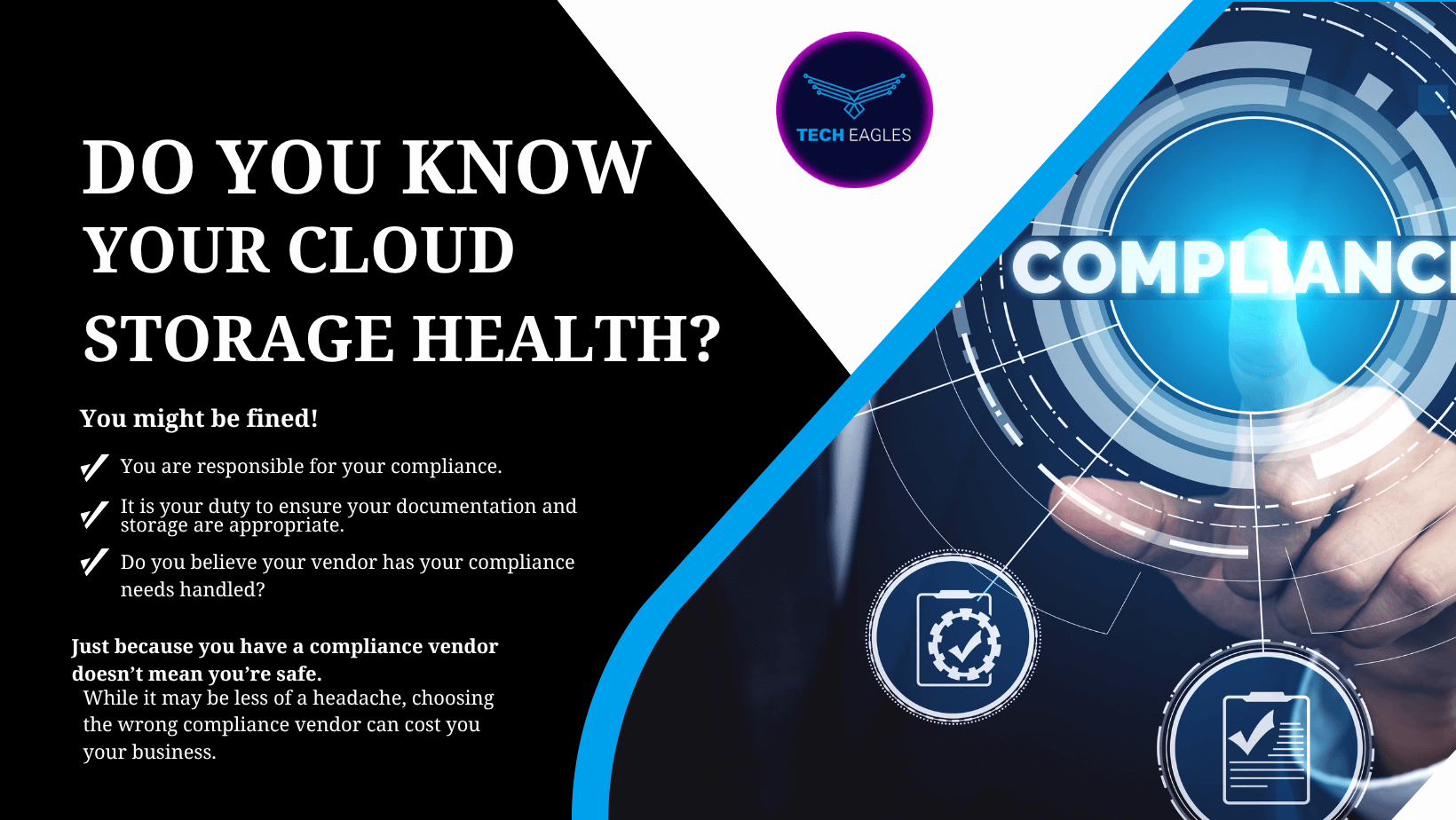
In recent months we have tackled different areas of interest for businesses in cloud storage options, such as learning if the cloud is a good option for your business and how to maximize cloud usage. While the cloud is a wonderful tool for business data and efficiency, each organization must be aware of the compliance concerns it can raise. Businesses that fail to meet compliance standards put themselves at risk of hefty fines and other repercussions. Any industry that operates within any type of compliance (ie: HIPAA, CMMC, NIST), needs to make sure it is enforcing best practices to remain complaint.
Though cloud compliance presents some complexity due to its nontraditional nature of storage, there are steps you can take to make sure you are compliant. One important aspect of cloud storage compliance is the idea of shared responsibility. Many businesses mistakenly believe that the cloud service provider is responsible for compliance, but this is not so. The service provider is responsible for the cloud services and securing their network and infrastructure; your business is responsible for your data, user configurations, and securing access management.
With all this in mind, here are some good principles to consider with some of the most common compliance entities:
- General Data Protection Regulation (GDPR): It is your responsibility to ensure data is stored in EU-compliant regions; implement strong encryption; maintain breach notification protocols; and enable data subject rights.
- Health Insurance Portability and Accountability Act (HIPAA): It is your responsibility to use a HIPAA-compliant cloud provider; keeping up to date with your Business Associate Agreements (BAA’s); enforcing strict access logs and audit trails; encrypting any virtual PHI in both storage and transmission.
- Payment Card Industry Data Security Standard (PCI DSS): It is your responsibility to tokenize and encrypt payment data; segment the networks in your cloud environment; perform regular penetration tests and vulnerability scans.
- Federal Risk and Authorization Management Program (FedRAMP) & Cybersecurity and Maturity Model Certification (CMMC): It is your responsibility to be strict with how you and your vendors handle data, encryption, and physical location security protocols.
In general, best practices will include compliance audits, stout access controls, data encryption (whether at rest or in transit), comprehensive monitoring, and regular, ongoing employee training. This can all seem overwhelming, because the reality is, with the growing of your business and ever-increasing dependence on technology, compliance and security easily becomes a full-time job. That is why a team like Tech Eagles is happy to come alongside you and take care of your IT network and business data needs so you can do what you do best in servicing your customers. Call us today to discuss a free network assessment or to talk about options for your business.
Categories:
