February 25, 2026
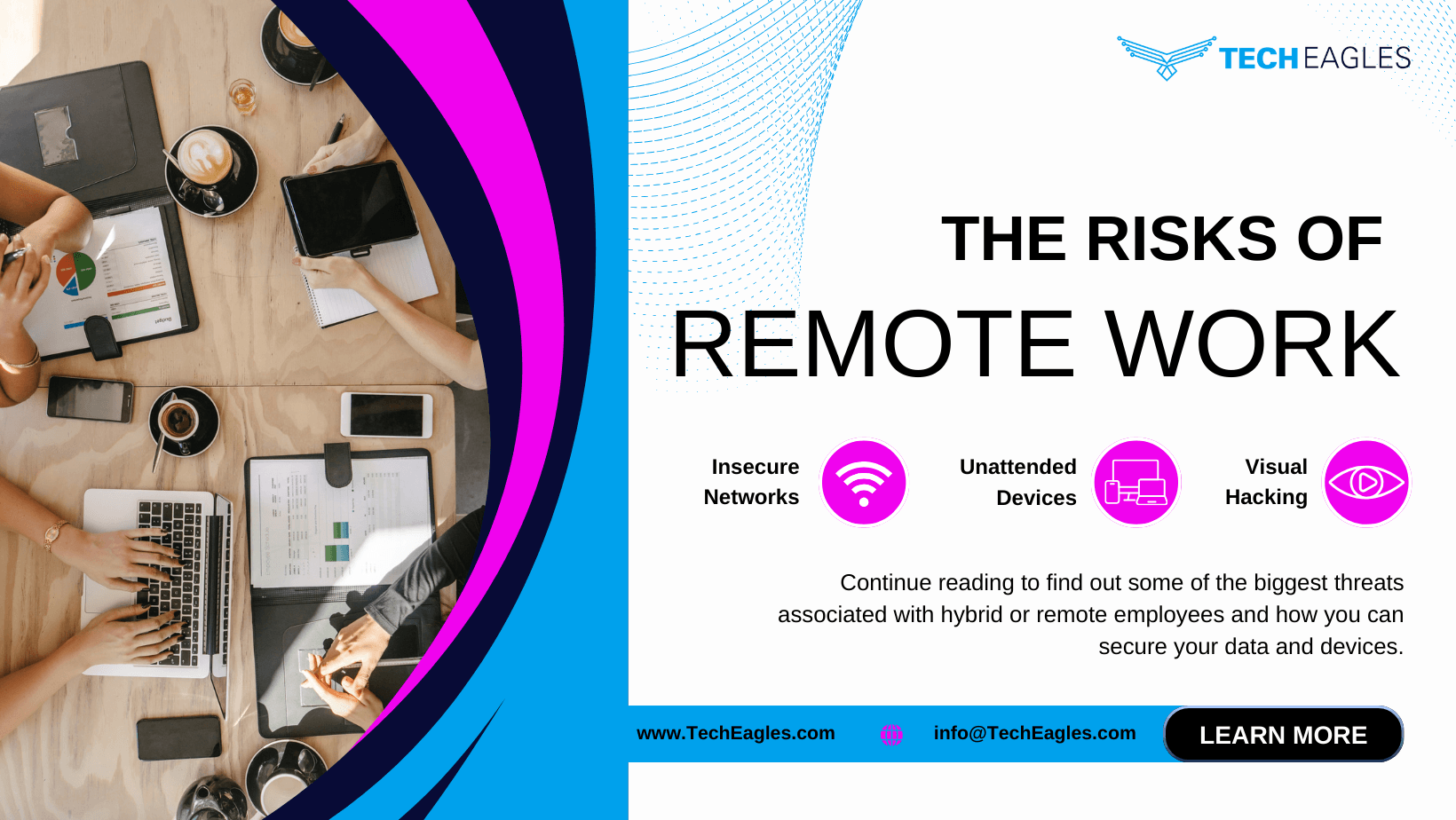
If you were to step into just about any coffee shop this week, you would mostly likely find a handful of individuals working remotely while sipping on their favorite drink. The concept of public remote work isn’t at all new but has certainly grown immensely in recent years. Work-from-home now means leaving home to work-from-library or work-from-bookstore. These public work environments are called “third places”, and they often offer flexibility and convenience but with an extra helping of risks to business IT systems. In response to this, businesses need to adapt and vamp up their security policies to protect themselves from different types of threats.
While free internet is a major incentive for third place work, hackers often target unsecure Wi-Fi to exploit company data. In fact, many, if not most, public places do not have strong network security or encryption. This allows a cybercriminal to easily intercept network traffic and steal passwords or sensitive data in seconds. A hacker can even set up a fake network that looks real, drawing unsuspecting victims into their net. The safest policy is to never trust any open connections, even if they require a password because if that password is widely shared, it can still pose risks.
A most effective tool for remote security is to use a VPN (virtual private network). With that set up, all data leaving the laptop is encrypted, making it unreadable to anyone intercepting. This should be a requirement when allowing employees to work outside the office.
Another concern is the risk of visual hacking. It is important to train your remote workers the possibility that someone sitting next to them in public might try to glance at their screen. This seems an unlikely possibility, but it can be a highly effective way to steal data and is incredibly difficult to trace back to the perpetrator. When an employee is absorbed in a work task, it’s easy to be unaware of people in their surroundings. To combat this, a business can issue privacy screens to all remote employees. These screens are like a filter that make the screen of their device appear black from the side, so only the person sitting directly in front of the screen can view its content.
Another risk of third place working is unattended devices. If your remote employee were to step away for a moment to fetch something or take a quick break, they make that device vulnerable to theft. Your remote work policy should stress how crucial it is to keep all devices physically secured, with them at all times, and never entrusted to strangers. Cable locks are another tool that can be used, though they aren’t a guarantee.
Your remote workers must also be cognizant of conversations and video/phone calls. If the verbal exchange includes confidential business matters, it can easily be overheard in public settings. If such meetings or calls are necessary, your employee should take those in a more private place, such as a car.
Bottom line: don’t leave your remote workers guessing what rules are. Make sure you have a clearly written policy that defines rules and expectations with regular training. Cybersecurity training is especially beneficial so your employees can understand the reason behind your policies and why following them is so important. Tech Eagles cares deeply about your business security. We not only provide you with all you need to secure your network, but we also connect you and your team with training to boost your security. Call us today for a friendly chat on how we can help you secure your business!
